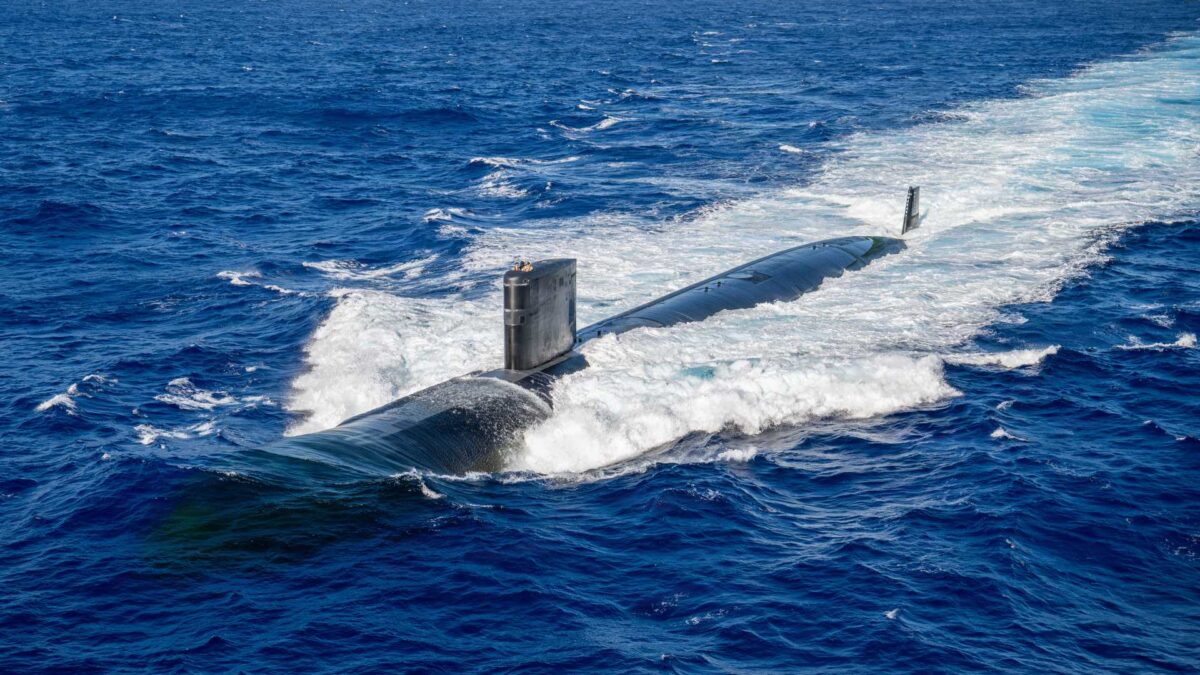
In today’s shifting geopolitical landscape, maritime dominance is increasingly defined not just by fleets on the surface, but by control and awareness of the underwater domain. China’s latest move—deploying dozens of ships and a vast network of oceanic sensors—signals a strategic and forward-looking investment in submarine warfare capabilities.
A large-scale undersea initiative
China has deployed 42 vessels along with hundreds of ocean-based sensors, forming an extensive network designed to monitor and analyze underwater environments. This operation spans multiple strategic regions, reflecting a globally coordinated effort to enhance maritime intelligence.



Rather than simple exploration, this initiative combines scientific research with military preparedness, enabling the collection of precise environmental and geographic data from the ocean floor.
This level of scale and coordination highlights a deliberate push toward undersea dominance.
Why ocean data matters in submarine warfare
Submarine operations depend heavily on environmental conditions. By gathering data on factors such as:
- Water temperature
- Salinity
- Ocean currents
- Seabed structure
China is developing a detailed and dynamic understanding of the underwater battlespace.
This information directly improves:
- Stealth and survivability of submarines
- Accuracy of sonar detection systems
- Effectiveness of anti-submarine warfare strategies
In modern naval conflict, superior data can outweigh traditional firepower.
The vision of a “transparent ocean”
A central concept behind this initiative is the idea of a “transparent ocean”—a fully monitored maritime environment where underwater movements can be detected and tracked in real time.
By deploying interconnected sensors, China aims to establish continuous underwater surveillance, allowing for early detection of foreign submarines and improved situational awareness.
This represents a major shift from reactive defense to proactive monitoring and control.
Blending civilian research with military strategy
Many of the vessels involved are officially classified as research ships, but their activities contribute directly to military objectives. This reflects a broader strategy of civil-military integration, where scientific missions support national defense goals.
Such an approach allows China to:
- Expand its operational footprint
- Gather data with lower visibility
- Accelerate technological and strategic advancements
The boundary between civilian research and military application is becoming increasingly blurred.
Strategic implications for global naval power
China’s growing focus on undersea capabilities presents a significant challenge to existing naval powers, particularly in the realm of submarine warfare.
Historically, undersea superiority has relied on decades of accumulated knowledge and technological advantage. However, China’s systematic data collection and sensor deployment could gradually shift that balance.
This development points toward:
- Intensified competition in underwater domains
- Greater reliance on data-driven warfare
- Rising strategic tension in key maritime regions
Conclusion
China’s deployment of ships and oceanic sensors is more than a scientific undertaking—it is a long-term strategic effort to reshape the future of naval warfare.
By investing in data, technology, and persistent monitoring systems, China is building the foundation for enhanced submarine operations and detection capabilities.
In the evolving landscape of modern warfare, the ability to understand and control the unseen depths of the ocean may prove to be the ultimate strategic advantage.